Session credit software for tutoring practices

Sell the package once, then let the credits count themselves down

TutorCredits keeps a live balance for every student, takes one credit off the minute a session is marked taught, and tells the family before the last one is spent. After the hour ends it drafts a short progress note for the parents, the kind that gets forwarded to grandma the same evening.

Credits tracked for 27,400 students 612 US tutoring practices Set up in one afternoon
Session ledger A tutor sitting beside a middle school student at a bright study table covered with notebooks and a laptop
Maya R. Algebra II credits
remaining of 24

Low balance note queued for the family

The daily leak

The package math nobody has time for

You did not open a tutoring practice to run a ledger. Every hour you spend reconstructing balances is an hour you are not teaching, and the arithmetic gets expensive faster than most tutors realize.

The legal pad ledger

Packages start on a legal pad, migrate to a phone note, then end up half remembered. By week six nobody is sure whether the Delgado family has four sessions left or one, and the only way to settle it is to scroll back through a calendar.

$40 to $90 lost per forgotten session

Hours taught for free

The student shows up, you teach a good hour, and the credit never comes off because the evening ran long and you forgot by Thursday. Independent tutors tell us they hand back two to four sessions a month this way without ever deciding to.

Around $1,300 a year per tutor

Renewals asked too late

Nobody notices the balance hit zero until the family says they will call you in the fall. The renewal conversation then happens cold, after the momentum is gone, and it is a much harder ask than the one you could have made two sessions earlier.

18% of packages never get renewed

Parents holding nothing

The family pays for ten sessions up front and then hears nothing concrete until report cards. Silence is the most common reason a household quietly stops booking, and it almost never gets said out loud on the way out.

3 in 10 families churn without a word

None of these are teaching problems. They are bookkeeping problems in a teaching costume, and together they are the reason a schedule that looks full on Sunday night can still end the month short by a few hundred dollars.

Show me the fix

How it works

Four rungs from package sold to parent update

Set it up on a Tuesday afternoon and the ledger runs itself from the first session onward. Nothing here asks you to change the way you already schedule or teach.

  1. Build the package

    Name it, set the credit count, set the price and choose an expiration window. A 10 credit Algebra II package and a 4 credit essay clinic can sit side by side under the same family, each with its own rate.

  2. Sell it and log the payment

    Record the check, the card, the Zelle transfer or the district purchase order. The balance opens at full, stamped with who paid, on what date, against which student.

  3. Mark the session taught

    One tap when the hour ends. The credit comes off, the session note attaches to the student record, and the tutor payout line is written in the same motion.

  4. Let the alerts and notes go out

    At two credits left the family gets a renewal nudge and you get a heads up in the morning digest. After each session the parent gets a progress note built from the log you already filled in.

A study table in daylight with open notebooks, colored pencils, a calculator and a laptop ready for a tutoring session
One ledger per student, one credit per completed hour, no second spreadsheet to reconcile on Sunday.

What the ledger keeps

  • Credit balance, price paid and expiration date
  • Who taught the hour and what was covered
  • Late cancellations, no shows and makeup credits
  • Every payment with its method and reference
  • Sibling accounts rolled into one family view

What is inside

Built around the way tutoring is actually sold

Six things the ledger does every week without being asked. Each one replaces a habit that currently lives in your head or on a scrap of paper.

Ledger

Automatic credit deduction

Mark the hour taught and the balance drops by one, with no second entry anywhere else. Half hours, double sessions and small group rates each deduct at whatever rate you set on that package.

Renewals

Low balance alerts

Choose the trigger at three credits, two or one, and the family hears from you while the tutoring is still in motion. The same alert lands in your morning digest, so the renewal call is never a surprise to either side.

Families

Parent progress notes

After each session you pick three lines: what was covered, what improved and what to practice before next time. The parent gets a clean note by email with no login to remember and no app to install.

Policy

Cancellation and makeup rules

Your 24 hour window is enforced by the ledger instead of by an awkward doorway conversation. Late cancellations burn a credit, approved makeups return one, and both leave a dated record the family can see.

Packages

Expiration windows that hold

Give a package 90 days, one semester or no limit at all, and the rule sticks without you policing it. Credits approaching their expiry surface on the dashboard early enough to schedule them rather than refund them.

Centers

Tutor payout lines

Every completed session writes a payout line at that tutor's rate, hourly or per credit, including group splits. Export the pay period as a CSV and hand it straight to whoever cuts the checks.

By month two

What changes once the ledger is doing the counting

These are the figures practices report back to us after their second full billing month on TutorCredits, drawn from 612 accounts across 44 states.

9 hoursback every month

Admin collapses into one screen

Package tracking, the who owes what email thread and the monthly reconstruction of balances all land in the same ledger. Practices moving off a spreadsheet see the biggest jump inside four weeks, mostly on Sunday evenings.

22%lift in renewals

The ask lands while momentum is high

The renewal nudge fires at two credits left rather than after the last hour is spent. Families decide while their student is still mid stride, which is exactly when a parent is most willing to buy the next ten.

$1,340recovered per tutor a year

Untracked hours stop being free

Sessions that used to slip past the notebook now deduct the moment they are marked taught. Across our accounts the median independent tutor recovers the equivalent of 21 sessions in a full year of teaching.

94%of progress notes opened

Parents read what you send

Notes go out the same evening as the session, from your own practice email address, with the student's name in the subject line. Open rates stay above 90% because families are waiting for them rather than filtering them.

From the practices

Tutors who stopped guessing at balances

Three accounts, three very different shapes of practice, all of them running prepaid packages before they ever heard of us.

★★★★★

I kept package balances in a green notebook and in my head, and one November I worked out that I had taught nine hours off a package that ran dry in October. That is a car payment. Now the balance is on the screen when I mark the hour taught, and the family has the note before I have finished stacking the chairs.

Alma Trejo Owner and lead tutor, Trejo Math Studio, Santa Fe, New Mexico

★★★★★

We run 14 tutors across two rooms and the payout sheet used to eat a whole Saturday. A payout line now gets written the second a session is marked taught, so I export the period and I am done before lunch. Renewals climbed too, because the front desk finally knows who is down to their last two credits.

Wendell Okafor Center director, Riverbend Learning Center, Dayton, Ohio

★★★★★

Test prep parents want proof, not encouragement. The note after every session gives them the score trend and one honest sentence about what we drilled, and I have watched three families forward it to a grandparent who then paid for the next package. I would never have thought to ask for that feature.

Bethany Kozlowski SAT program lead, Northline Test Prep, Bellevue, Washington
612 US tutoring practices running on the ledger
27,400 student credit balances kept current
4.8 out of 5 average rating from 143 written reviews

Plans

Priced like a tutoring practice, not like enterprise software

One flat monthly fee per practice. No charge per session, no charge per credit, no percentage of what a family pays you.

Independent Tutor

For one tutor running packages from a home office, a library table or a rented room.

$19per month

Billed monthly in USD, cancel any time

  • Up to 40 active students
  • Unlimited package types and credit rates
  • Automatic deduction and low balance alerts
  • Parent progress notes by email
  • Payment log for cards, checks and transfers
  • CSV export whenever you want it
Request a demo
Recommended

Tutor Team

For a practice with two to twelve tutors sharing students, rooms and a renewal calendar.

$49per month

Billed monthly in USD, cancel any time

  • Up to 200 active students
  • Everything in Independent Tutor
  • Per tutor payout lines and pay rates
  • Family view with sibling accounts
  • Cancellation and makeup policy rules
  • Two admin seats, unlimited tutor seats
Request a demo

Learning Center

For a center invoicing districts and running programs across more than one location.

$119per month

Billed monthly in USD, cancel any time

  • Unlimited active students
  • Everything in Tutor Team
  • Dashboards split by location
  • Purchase order and district invoicing fields
  • Program level reporting for funders
  • Priority support with a named contact
Request a quote

Every plan is billed monthly in US dollars and can be cancelled at any time from the account screen, with no exit fee and no notice period. There is no setup charge, no per session fee and no commission on what families pay you. Your students, balances, session notes and payment history export as CSV files whenever you ask, including on the day you leave.

Straight answers

Questions tutors ask us on the first call

If yours is not here, put it in the message box further down and we will answer it in writing before any demo.

Session Notes

Session Notes, our tutoring practice magazine

Reporting on the craft, pricing, and paperwork of running an independent tutoring practice in the United States. Three pieces from the current issue, then the whole run.

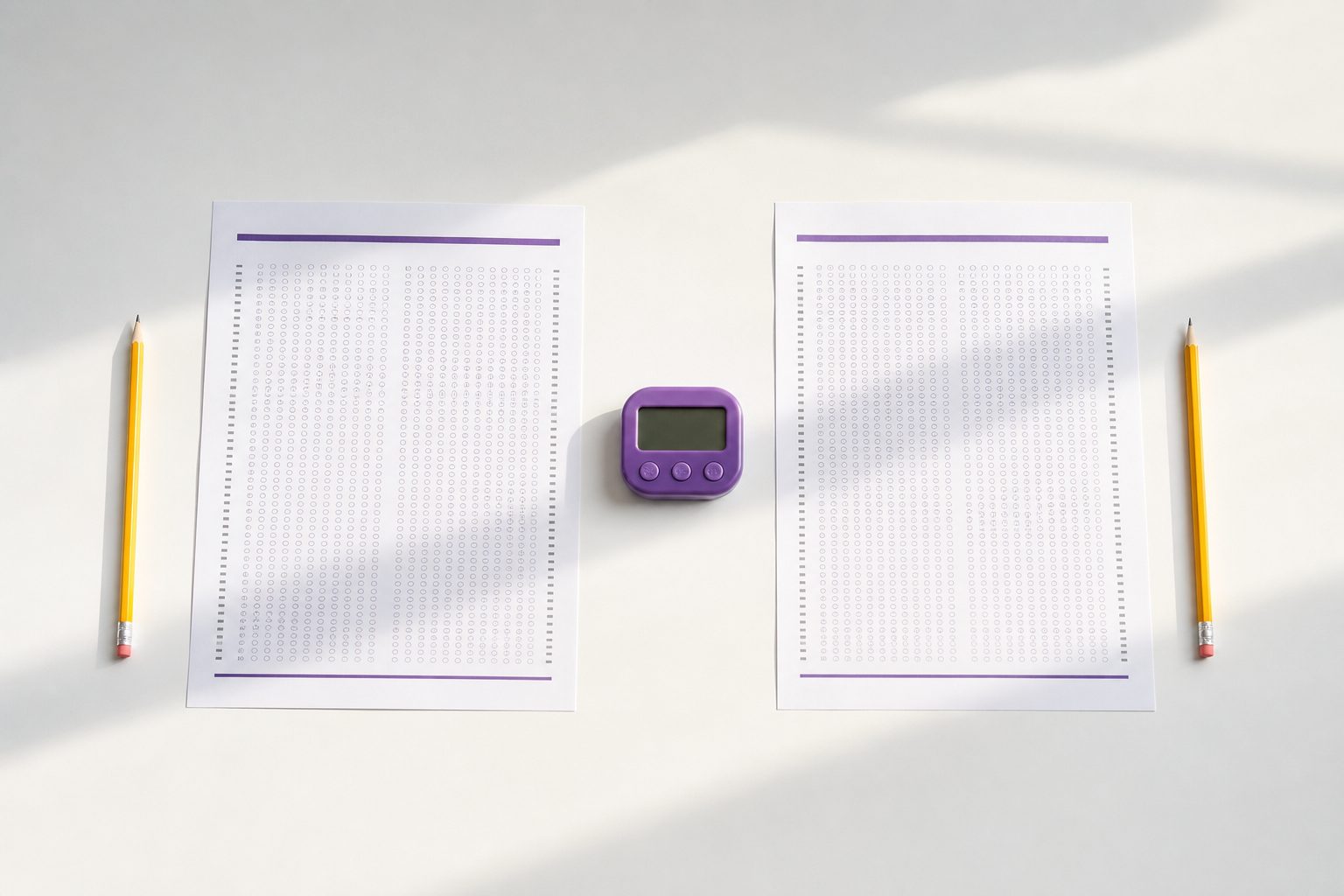
Two blank answer sheets and pencils side by side on a white desk with a small violet timer between them

comparison

Digital SAT vs ACT: How to Advise a Family on Test Choice

The digital SAT is adaptive and shorter. The ACT runs with an optional science section. Here is how each format changes prep hours, pacing drills, and the score a student can realistically reach.

7 min read

Read every article in Session Notes

Book a walkthrough

Bring us the balance nobody can agree on

Pick the student whose package has been argued about twice this month. In a 20 minute call we will build that package live, mark a session taught, and you will watch the credit come off, the alert queue up and the parent note draft itself.

  • A working demo built on your own package types, not a slide deck
  • A written quote inside one business day, with the plan we think fits
  • Hands on help importing balances if you are moving off a spreadsheet
  • An honest answer if your practice is better served by something else

Tell us about your practice

Please tell us who we are writing back to.

We need a valid email address to send the quote.

Please add the name families see on your invoices.

Pick the line that fits you best.

Choose the kind of reply you want.

This tells us which plan to quote.

A spreadsheet, a notebook, a scheduling app, memory: all honest answers, and all of them tell us something useful.

A sentence or two is plenty.

A real person from the product team answers every message within one business day, Monday to Friday. If you would rather skip the form, write to jimenezjulien42@gmail.com and say what your practice teaches.